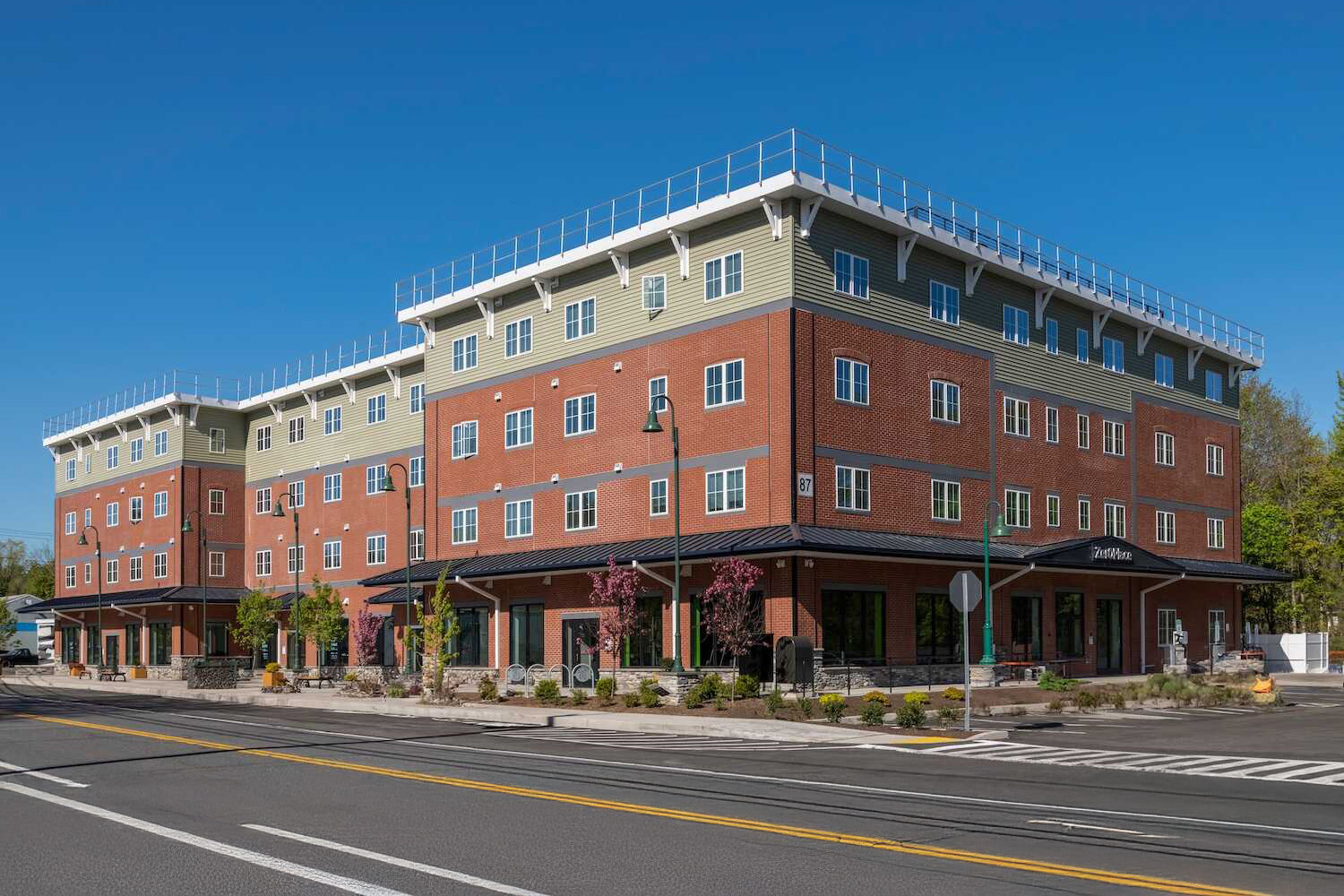
Zer0 Place
New Paltz, NY
-

US Northeastern Climate Cold Winters
-

Ground Source Heat Pump via Vertical Loop System
-

45 Residential Units
5 Affordable Housing Units
64,000 Square Feet

A Blueprint for Tomorrow
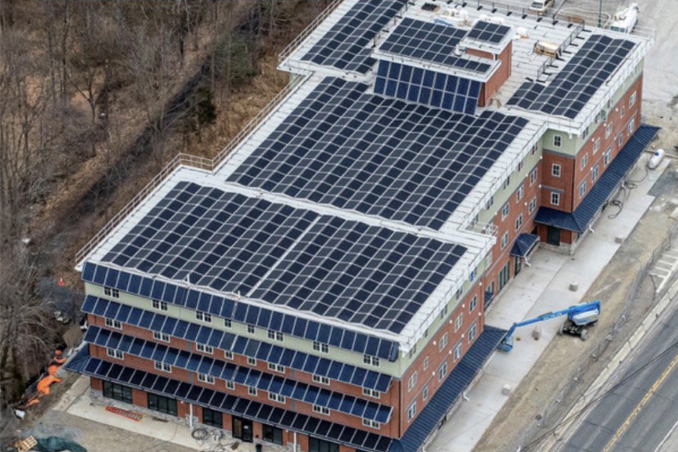
The project was developed was developed with a forward-thinking mindset, aiming to intergrate optimal energy efficiency, renewable technologies, and intentional urban design into a single, cohesive development.
Zero Place sets a new precedent for how communities can grow while implementing sustainable practices. The goal was to create a building that generates as much energy as it consumes annually, and in doing so, offer a practical model for how carbon neutral solutions can be adapted to work in both rural and urban environments.
"The GSHP system [designed & installed by Buffalo Geothermal]... is expected to perform at least 15% more efficiently than a conventionally designed GSHP system."

Geothermal
System
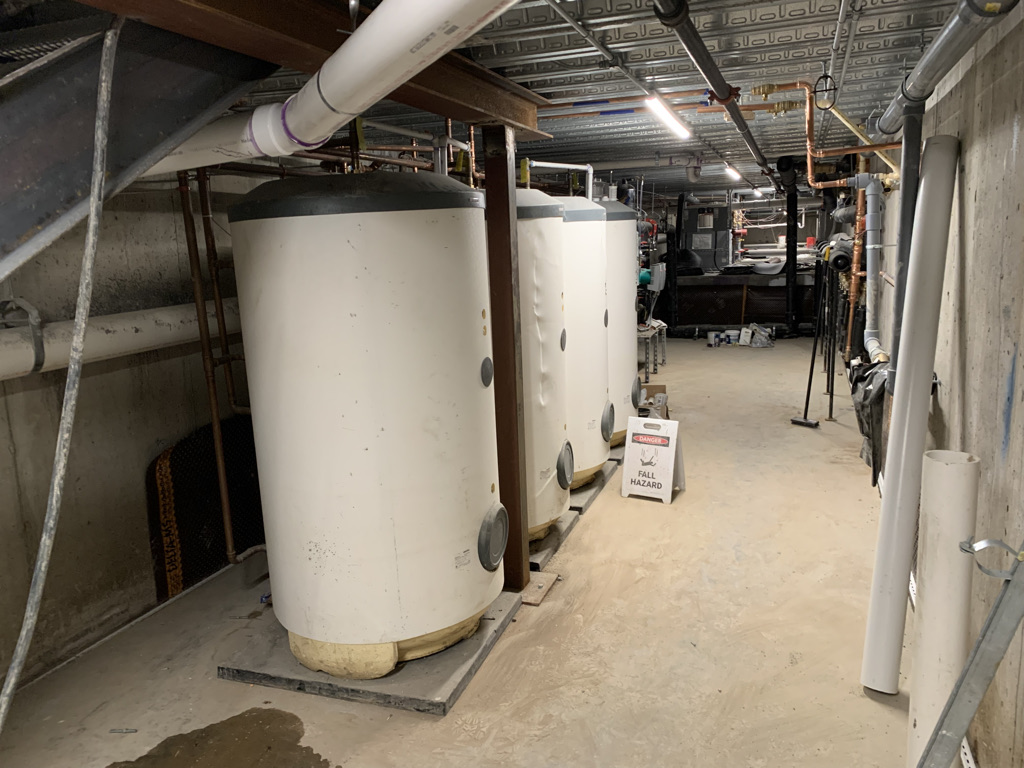
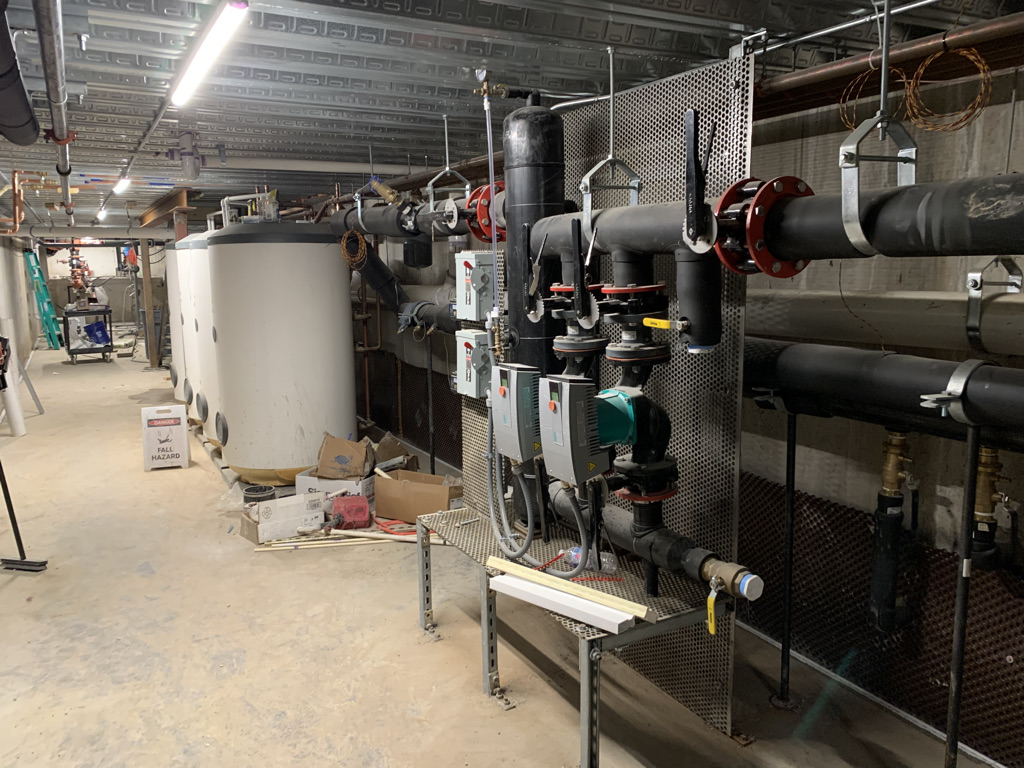
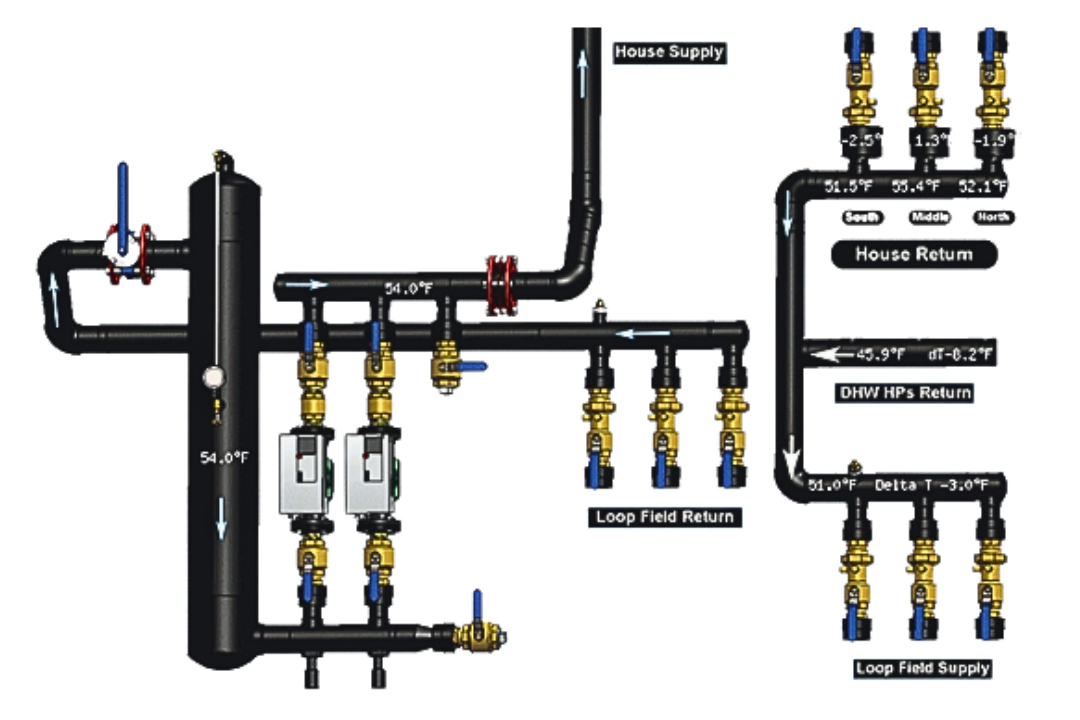
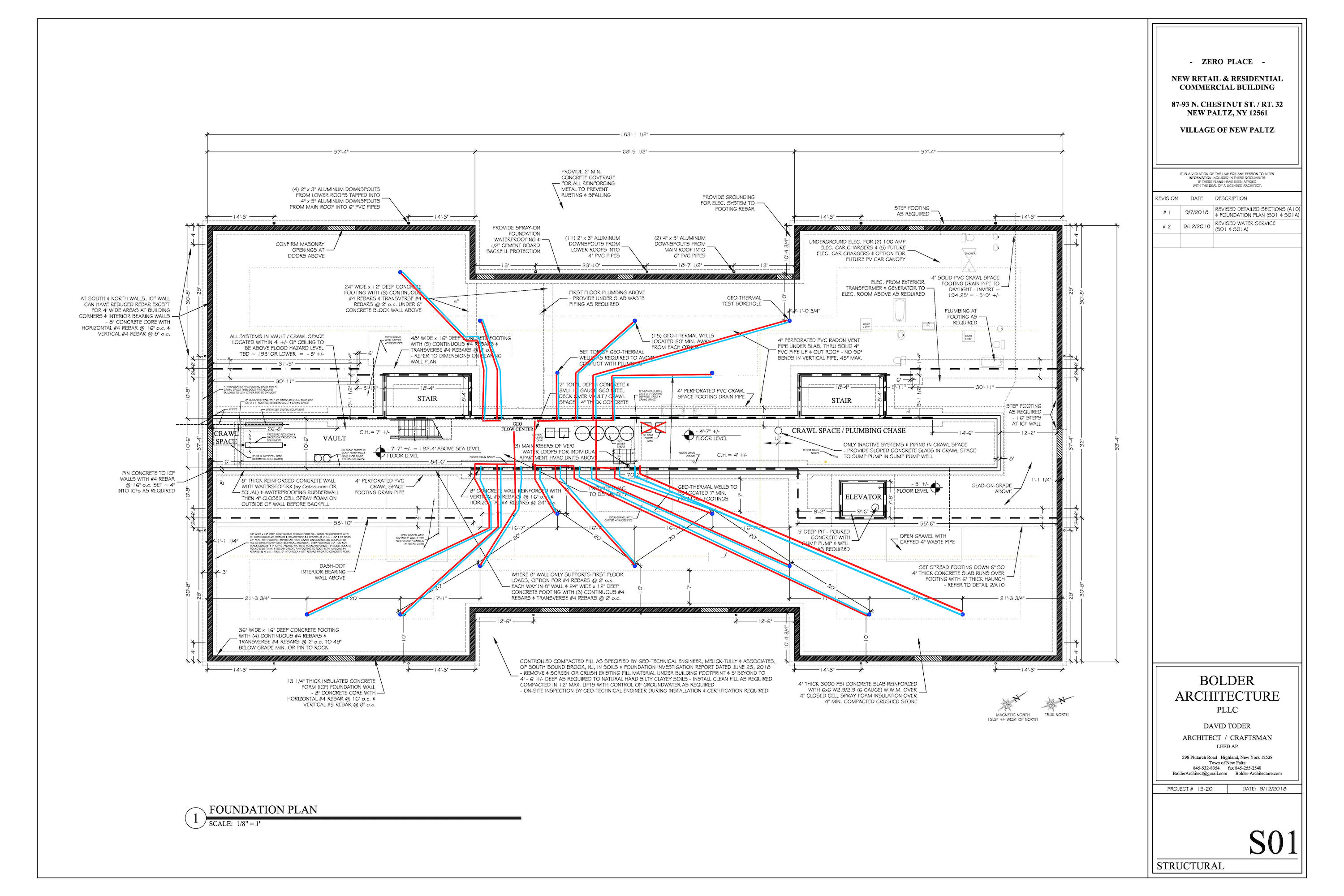
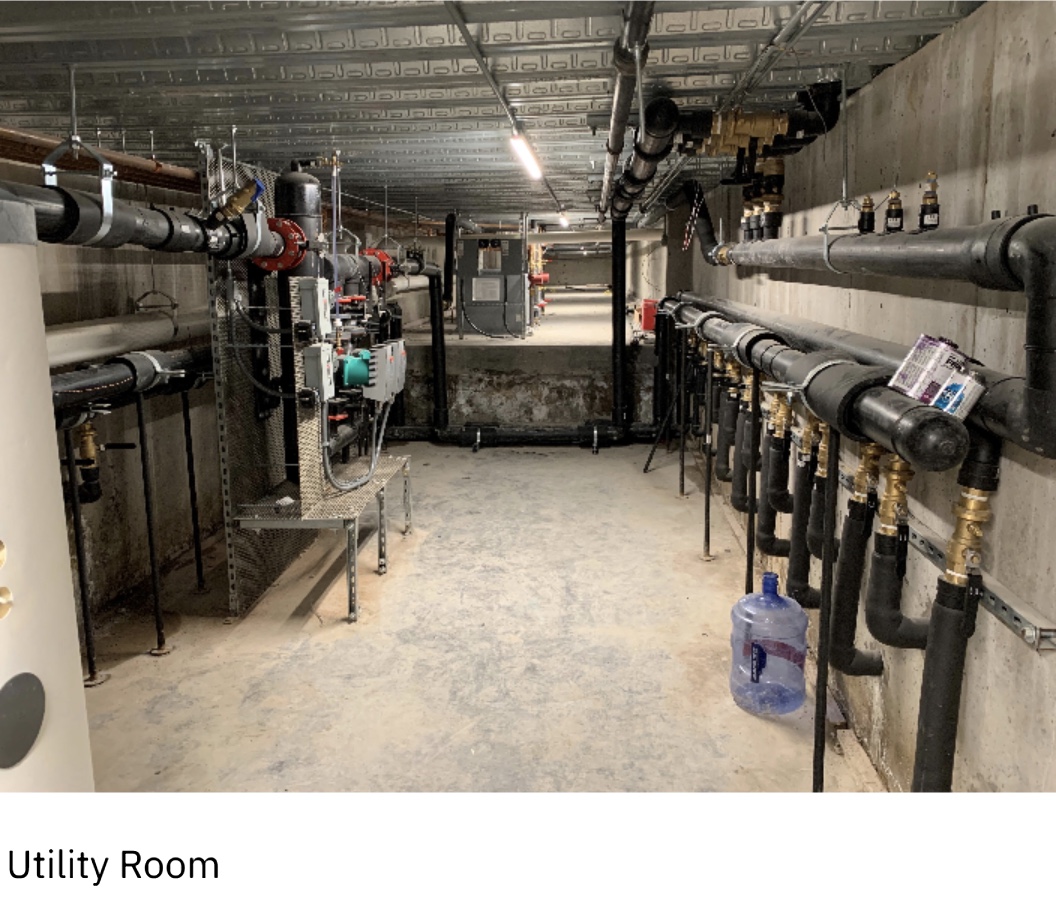
To align Zero Place's heating and hot water systems with the project's net- zero energy goals, Buffalo Geothermal was brought on as the design-build contractor. Based on the building's size, use case, and limited lot footprint. Buffalo Geothermal engineered a closed-loop geothermal system using 15 vertical boreholes, each 400 feet deep. The concept being that they draw from the ground's temperature, surrounding the boreholes, which acts like a thermal battery, to deliver consistent comfort year-round. This system is a prime example of how geothermal can be successfully implemented in space-constrained, densely populated areas.
An important consideration in designing the system was that multi-family buildings like Zero Place are typically cooling-dominated due to the internal heat generated by residents, appliances, and equipement. This means the system puts more heat into the ground than what it pulls during the winter. To counteract this thermal imbalance, the system was designed to generate the domestic hot water using the cooling load, leading to the need of less boreholes.
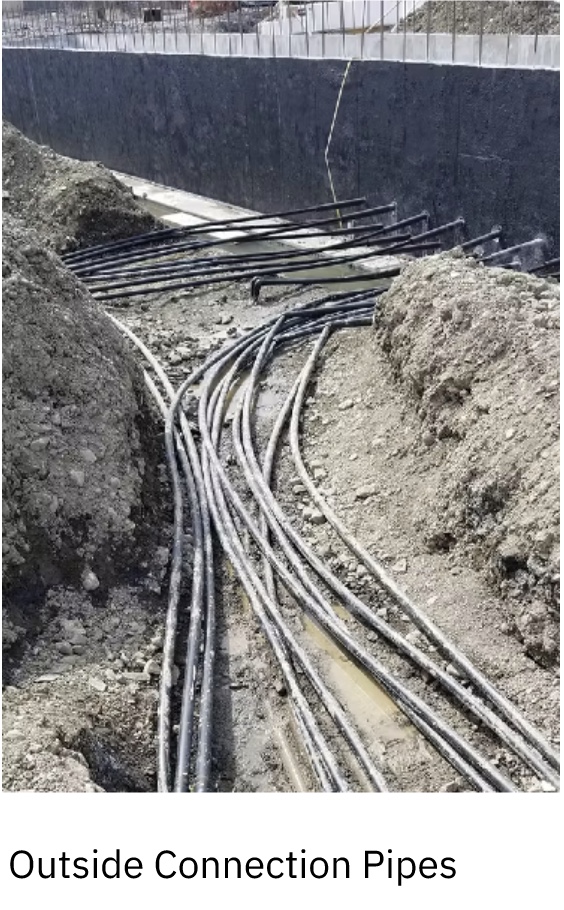
In addition, larger diameter high density polythylene (HDPE) piping was installed to ensure a decrease in pressure drop in the system's pipes, improving flow and pumping efficiency. The larger pipe also increases surface area, enhancing heat exchange between the ground and the loop field, ultimately boosting performance.
Vertical loop field via 15 boreholes, 400 ft. deep
Mixed-use, multi-family development meant higher cooling load
Large diameter high density polythylene (HDPE) piping.
Featuring:
- 50 Single-Stage Units
- 2 Dual-Stage Units
- 6 Variable-Stage Units
- 2 High-Temperature Water-to-Water Heat Pumps

Project Performance
COP & EER policy makers monthly heating & cooling costs per 1000 sqft
Annual Summary (2022-2023)
| Avg HW Use | 1,285 gal/day |
| Space WSHPS | 79,250 kWh |
| DHW WWHPs | 30,835 kWh |
| Loop Pumps | 3,541 kWh |
| Avg. Pumping Power | 404 Watts (0.55 Horsepower) |
| Peak Pumping Power | 596 Watts (0.81 Horsepower) |
Peak Monthly
Peak Cooling Costs
July
$31.58 /
1000 sqft
Peak Heating Costs
December
$35.28 /
1000 sqft
Why it Worked
A big credit of the success of Zero Place was the integrated design approach from the start. Unlike the traditional approaches, where the architectural design is completed before bringing on the mechanical engineers, energy consultants, or specialty contracts, this project prioritized early collaboration.
The team developed a comprehensive energy blueprint before finalizing the building design, allowing for an accurate determination of equipment sizing, system optimization, and a seamless integration of geothermal. Not only did this maximize building and system performance, but also minimize any design conflicts and delays.